

How to Pay For New Drivers License
The procedure of getting a new driver's license is various in every state. Nevertheless, the basics are usually the same: pay a charge, take a composed test and a roadway test.
New York drivers also have the choice to get an improved or REAL ID card, which stands for crossing US-Canada borders.
Getting a Learner's Permit
When you're prepared to start learning how to drive, it's crucial that you comprehend the process-- conference eligibility rules, scheduling tests and more. It's best to start with a student's license, which will enable you to practice under guidance. By studying, practicing purposely and complying with constraints, you can build skills that will enable you to quickly advance towards real driving self-reliance.
To look for a driver's permit, you'll need to visit your regional NY DMV office. It's advised that you schedule a visit online to prevent long haul times. The DMV will require evidence of your identity, age and residency. This can be done by bringing a valid ID card, passport, military ID or other government-issued files. If you're under 18, your parent or legal guardian will require to sign a permission form (MV-44). You will likewise require to pass a written test and vision exam. To prepare, study the New York Driver's Manual and take practice tests.
The composed test will include multiple-choice concerns based on info in the Driver's Manual. The exam will cover traffic laws, road signs and safe driving practices. You can study the handbook on your own or enlist in a driver education course that consists of classroom guideline and behind-the-wheel training. Taking practice tests can help you determine your understanding and determine locations where you need to focus your research study efforts.
After you pass the composed test, you will pay a charge for your learner's license. The amount differs by age. You can pay utilizing cash, an individual check or a charge card. Make sure to review the fee schedule before checking out the DMV to prevent any surprises.
Once you've paid, the DMV will issue a momentary student's authorization. Keep the license with you at all times while you're driving and make sure to follow any restrictions that are on it. After you've held your authorization for six months and passed your road test, you'll be able to get your complete license. At that time, you'll be needed to complete 50 hours of supervised driving, including 15 hours in nighttime conditions and 10 hours in light or moderate traffic.
Taking the Written Test
If you're a new driver, passing the composed test is a necessary step in getting your license. The test includes multiple-choice concerns about traffic laws and rules that your state needs you to know. Each concern has an involved response, and the state sets a minimum score that you must accomplish to pass the test. To get ready for the test, study your state's driver's handbook and take practice tests. You can also use online driver's ed courses and your state's DMV website to find valuable research study materials.
A lot of states require you to address a minimum of 80% of the concerns correctly to pass the test. To enhance your opportunities of a good rating, it's a fantastic concept to make a list of the questions that are hardest for you to respond to so you can focus on those areas. You must also review your driving abilities and familiarize yourself with common road signs and traffic signals. In addition, you must spend time driving with a licensed driver and learn the basics of your lorry's operating systems and security functions.
When you're prepared to take the test, visit your local DMV office and present all the needed documents. This generally consists of proof of your identity (e.g. a passport, state-issued ID card or birth certificate), proof of residency (e.g. an utility bill) and your Social Security number. If English is not your main language, you can request for a translator to help you understand the test questions and answers.
Make sure to get to the DMV on time for your visit. Thirty minutes before your test starts isn't the time to be looking for your keys or having a hard time with your morning coffee. Arriving early also offers you the possibility to evaluate your materials one last time and prepare psychologically for the test before your examiner greets you.
As soon as you've successfully completed the written test, you'll be offered a temporary authorization that allows you to drive on public roadways under supervision. var beställer man nytt körkort will then process your application and send you the irreversible license by mail. Before you get behind the wheel, it's a great concept to evaluate your state's car insurance coverage choices so you can choose the very best policy for you.
Taking the Road Test
After all the foundation laid through supervised practice, pre-licensing course, and months using your student's license, it's time to take the huge test. The roadway test is your opportunity to display your abilities, get a license, and finally cruise towards new experiences.
Before you head to the Department of Motor Vehicles to schedule your exam, get ready for the test by ensuring you have all the proper documentation. Besides your driver's license, bring your pre-licensing course certificate (MV-278) or trainee certificate of conclusion, and a Certification of Supervised Driving (MV-262), if you're under 18. Likewise keep in mind that many Department of Motor Vehicles offices do not supply vehicles for the test, so ensure the vehicle you plan to use has liability insurance coverage.
The road test will be conducted by an inspector who will observe your capability to handle your automobile and comply with all traffic laws while evaluating numerous core driving competencies. The most crucial of these consist of turning appropriately and securely, leaving the appropriate amount of space between you and other lorries, accelerating and braking smoothly, effectively using turn signals, and correctly changing lanes. In addition, your inspector may ask you to perform a maneuver such as parallel parking.
Be prepared to show a variety of driving circumstances during your test, consisting of backing up, perhaps around a corner; three-point turns; left- and right-hand turns; and merging onto highways or passing other automobiles. If you're unsure what to expect, evaluate your state's driving handbook for details.
It's an excellent idea to go to the screening site a minimum of when before your real test to acquaint yourself with the basic design and traffic signs. You can likewise inspect the weather report to guarantee ideal conditions for your road test.
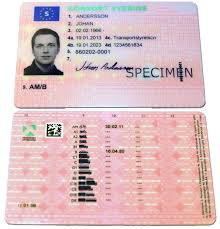
On the day of your test, show up early and be prepared to demonstrate all the driving abilities you've been practicing. Do your finest to prevent diversions and focus entirely on delivering a flawless performance. Upon completion, you will receive your interim license and can celebrate a milestone accomplishment. After a few weeks, your permanent NY drivers license will show up by mail.
Getting Your Regular License
When the New York DMV feels that you've gotten enough monitored driving experience, it will offer you your complete driver's license. This is referred to as a Class C License and it costs $32 for an 8-year license. When you receive your complete license, you'll need to take a road test again. It's best to reserve your road test beforehand. It will conserve you time.
New drivers should likewise complete an alcohol and drug awareness course as part of their licensing process. These courses can be taken through high schools, colleges, or DMV-approved driving schools. In addition to finishing the course, you will need to log 30 practice hours and 10 of those hours should be driven at night. You must likewise have 20/40 vision with or without glasses/contacts.
It's essential for young individuals and their parents to understand the Graduated Driver Licensing Law and other responsibilities and limitations that feature the new license. If a teen gets any traffic tickets, their license may be suspended. This might need that they complete a driver improvement course or even go through the probationary duration all over again.
There are a number of various types of licenses in the state of New York, consisting of licenses for commercial lorries. These licenses have various requirements depending upon the kind of automobile and the weight class. For example, a Class A license is needed to drive a truck or bus and it requires extra training and screening than a guest vehicle license would.
The most typical license is the one that enables you to operate automobile. This is described as the Class D license. A Class D license can likewise pull double duty as a state ID card.
The process of getting a license in New York begins with conference eligibility requirements, studying the traffic laws, practicing under supervision, taking written and road tests, and lastly looking for a license. It is advised that you make a consultation at the DMV to avoid long wait times. It's likewise an excellent idea to bring two evidence of residency with you.